Boardgame · 2025 · Visual project
Encruzilhados
A tabletop game project inspired by western movies and mythos
- Role
- Game & Visual Designer
- Type
- Tabletop game
- Year
- 2025
- Discipline
- Game Design
Tags: Game Design, Illustration, Print Design
- 3–8: Players per match
- 40–60: Minutes per match
- 10: Playable characters
- PvP: Players vs players
- Skill: Dexterity mechanics
The problem
We have never been so connected and so rarely together. Our work, now mostly done in front of computers, pushed our leisure onto screens as well: streaming, social media and digital games fill the time that used to be for gathering and closeness.
Interconnectivity takes its toll on in-person experiences. Seeing friends stopped being routine and became something that needs a reason, a schedule and effort. We are one click away from anyone and one hard invitation away from spending an afternoon together.
In an increasingly digital world, where our leisure lives behind screens, how can we create a tactile and socially engaging experience?
- R$ 88 bi: Global board game market
- R$ 750 mi: Brazilian board game market
The solution
The answer seems clear: the board game market is resurging as an analog counterpoint to hyperconnection. It has been growing since the pandemic, the moment we were most connected digitally.
Valued at US$ 14.4 billion globally in 2024 and projected to reach US$ 31.9 billion by 2032 (Fortune Business Insights), the market looks worth the investment. In Brazil, analog games grew 51% between 2019 and 2023 and already account for 13.1% of toy market sales (Sebrae, 2025).
Two audiences drive this growth: millennials, who buy into childhood nostalgia and the ritual of playing in groups, and Gen Z, who look for socializing and a break from the digital.
Methodology
For the process I chose Bruno Munari's methodology, “Das coisas nascem as coisas” (From things, things are born), since it includes several validation and testing stages and suited my product focus best. I also brought in ideas from well-known game designers, such as Raph Koster's Theory of Fun and Scott Rogers' A Guide to Great Tabletop Game Design. Both explain core game design concepts and build on Mihaly Csikszentmihalyi's principle of Flow.
- Research: Interviews with different users and market analysis.
- Visual concept: Conceptual and thematic ideation.
- Mechanics & rules: Rules, how the game works and its elements.
- Sketches & prototypes: Prototypes of the game's physical components.
In Flow: The Psychology of Optimal Experience, the author explains the learning curve needed to immerse someone in a task. The same logic applies to game design to create highly engaging experiences in which players feel fully immersed.
This is achieved by balancing the difficulty of the challenge with the player's skill level, avoiding both boredom (too easy) and frustration (too hard).
Diagram of the Flow state
Interviews
I interviewed more than 40 people with varied profiles (age, social class and familiarity with games) and gathered insights on how different players use games.
I also asked what keeps them from playing board games. Aside from cost, these were the pain points that stood out:
Learning a new game usually takes too long, and with the cost and the lack of people, I don't feel like learning at all.
Some games you play a bit and have fun, but soon the game loses its charm.
Familiarity with board games: Beginner 39.4%, Intermediate 39.4%, Advanced 21.2%
How often they play: Every 2 months 54.5%, Every 15 days 39.4%, Weekly 6.1%
The pain points mentioned by different interviewees reveal two types of players, each needing a solution that works for them.
- Beginner. Likes: Likes simple games with friends. Barrier: The complexity and length of some games.
- Veteran. Likes: Likes complex, dense games. Barrier: Friends only want to play games that are too simple and quick.
Market analysis
Analysing different board games, I mapped them on two axes and noticed that few games sit at the centre between complexity and play time: the more complex, the longer the game. Encruzilhados needs to sit at the centre of these axes to please both types of players.
Market map: BANG! The Dice Game; Dungeon Fighter, Zombicide, Cursed; Western Legends.
Visual concept
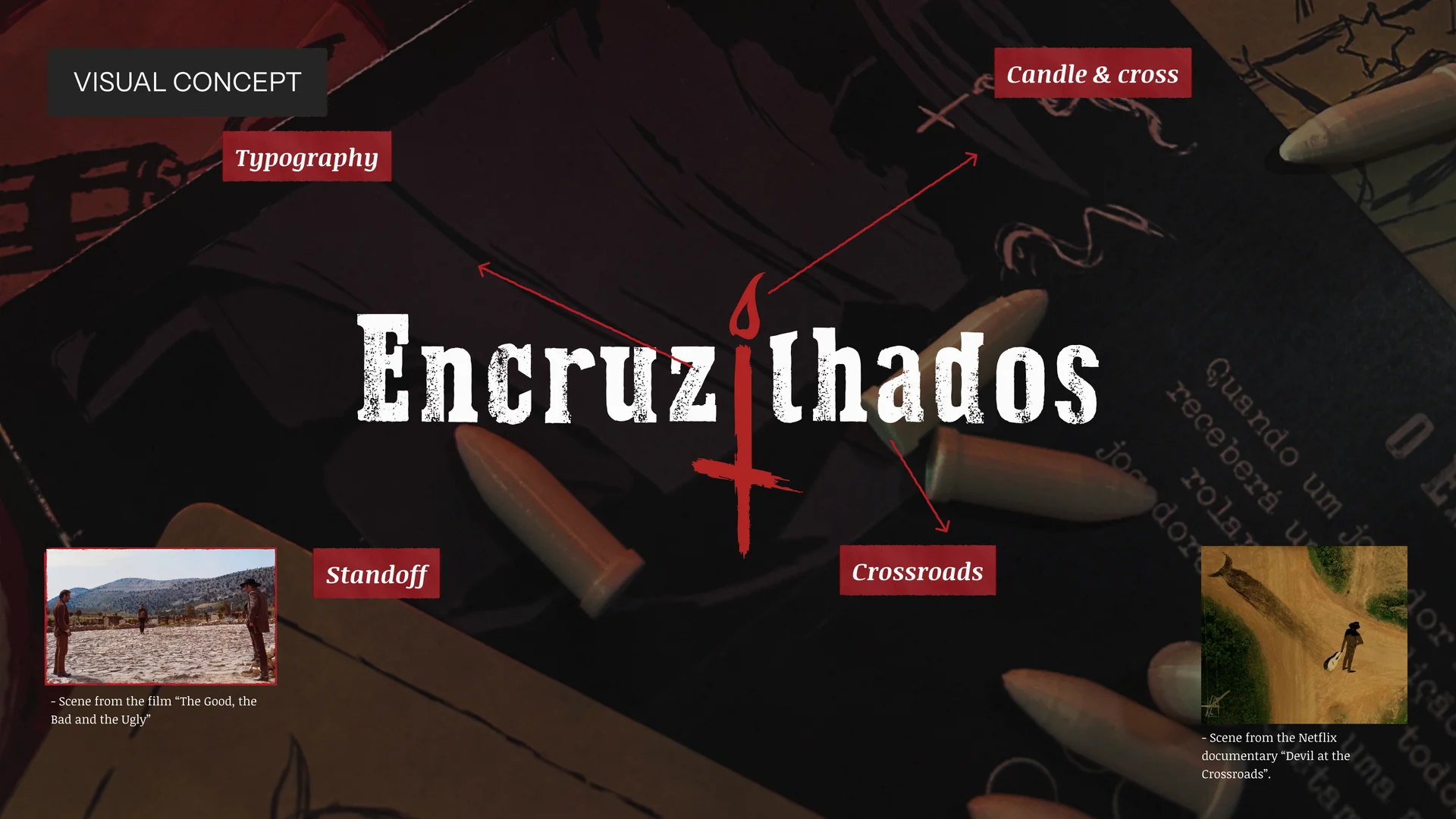
- Typography: Burnt visual elements and serif typography evoking a dark, bygone era.
- Candle & cross: An inverted cross in the middle of the logotype splits the word in two and stands for the game's paranormal, dark side. The flame at its tip, like a candle, refers to rituals associated with spirits.
- Standoff: A mechanical and visual concept inspired by western stories in which three or more opponents point their guns at each other, so nobody walks away unharmed.
- Crossroads: A crossed path, referencing the board that divides the players and the legend of Robert Johnson: the mysticism behind the pioneer of American blues and his infamous deal with the devil at the crossroads in Hazlehurst, Mississippi.
Rules & mechanics
To make the game more dynamic and engaging for different audiences, there is no turn system. The twist is at the start of each round.
With up to 8 players, everyone in Encruzilhados throws their die onto the board at the same time. Each area has a specific effect, and the closer to the centre the die lands, the more powerful the play.
- Simultaneous throw: Everyone throws their die onto the board at the same time. The round starts together for the whole table, and throwing skill matters as much as luck.
- The zone defines the effect: Each area of the crossroads applies a different effect: area damage, disarming an opponent's play, or even a pact with the Encruzilhado in exchange for advantages.
- Initiative: The die face plus the board position and each character's draw speed decide who acts first. The order is tracked on a 3–20 track with initiative pieces.
- Actions & shots: Each player acts based on their board position and character, dealing damage to opponents. At the end of the round everyone collects their dice and a new round begins. The last survivor wins.
Video: a match of Encruzilhados.
The characters
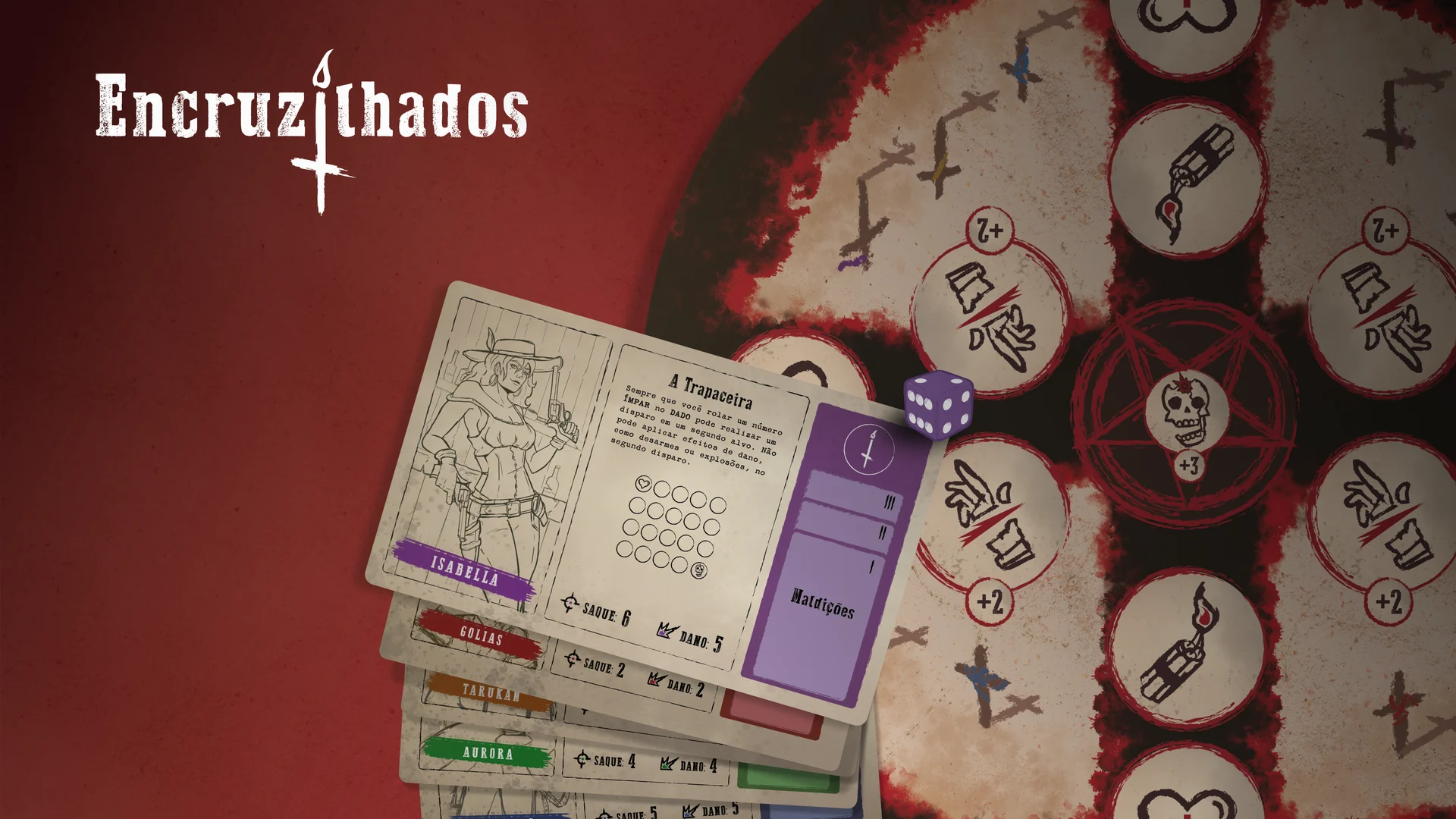
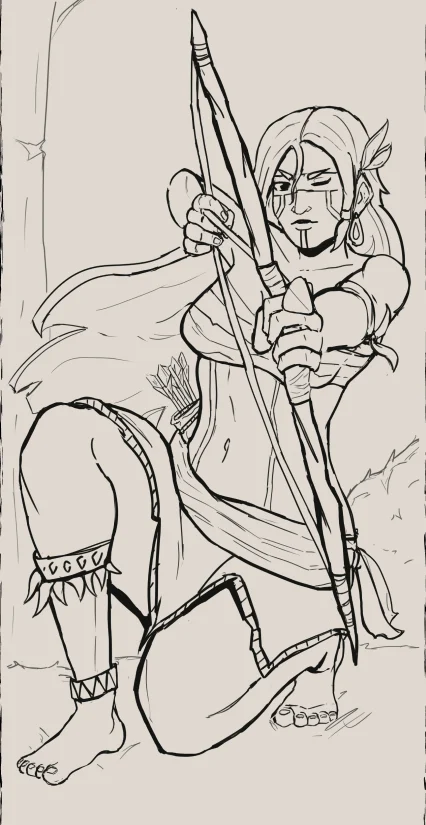
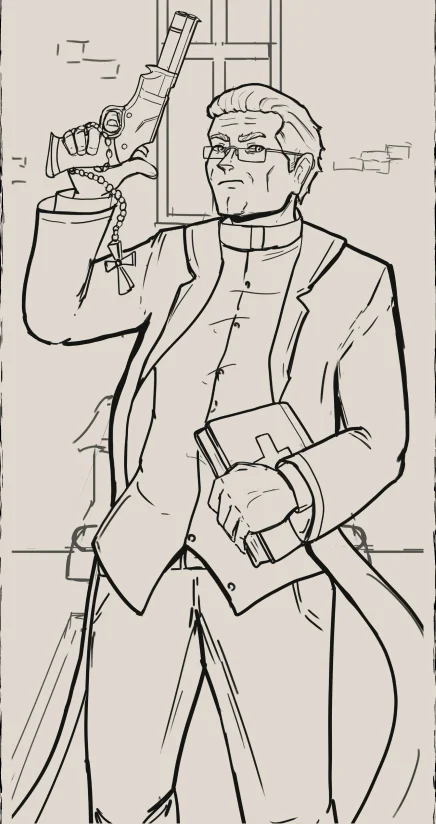
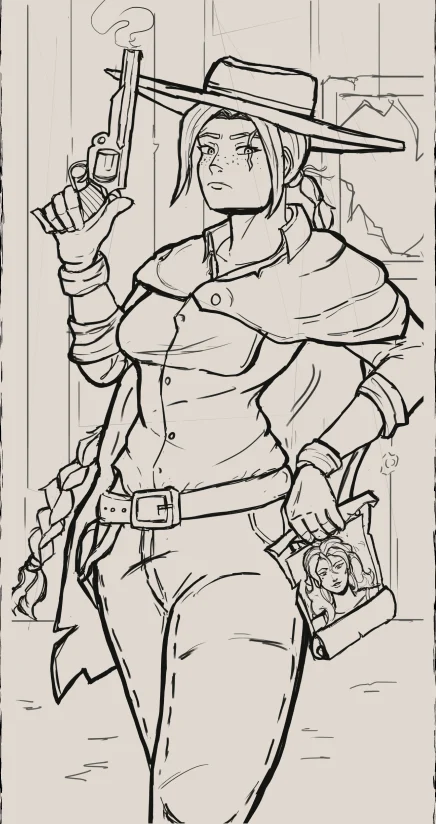
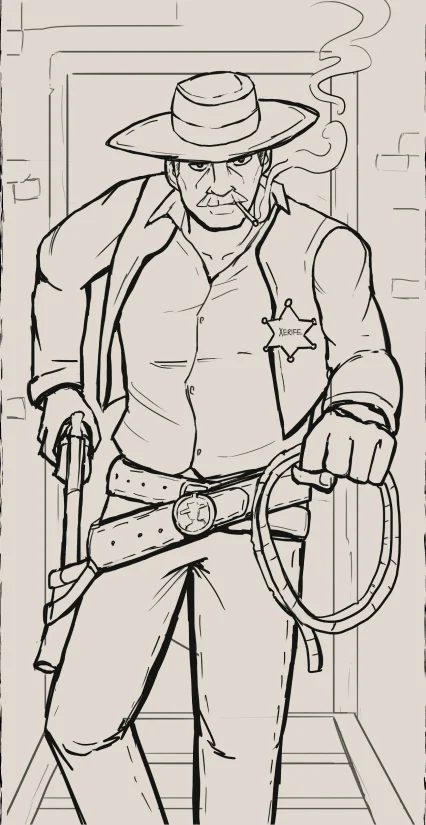
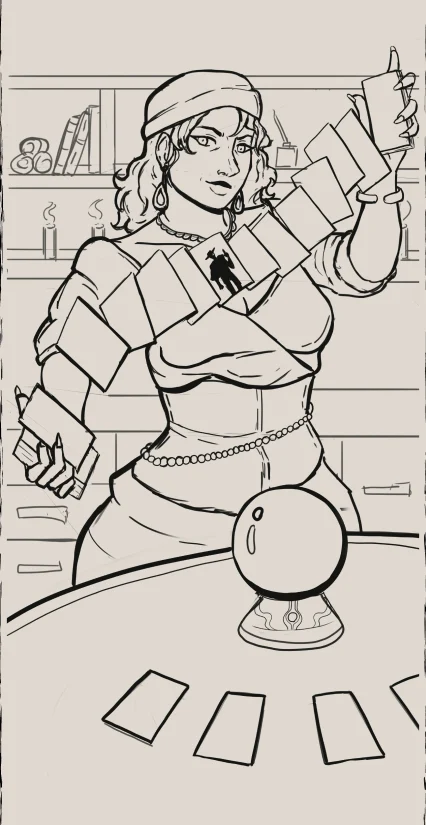
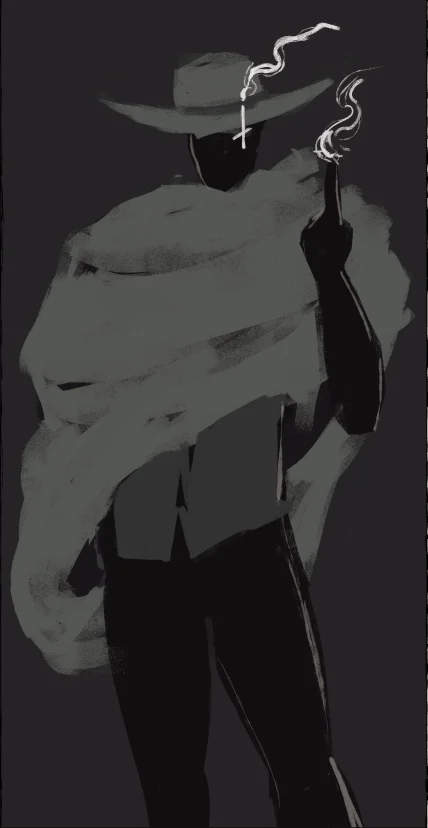
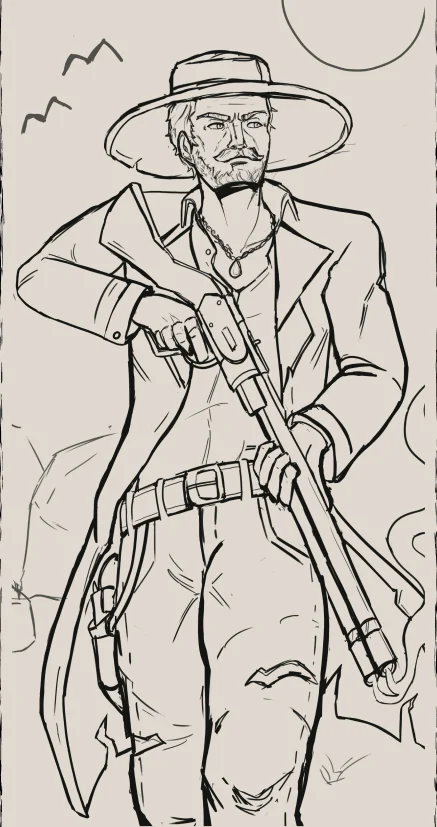
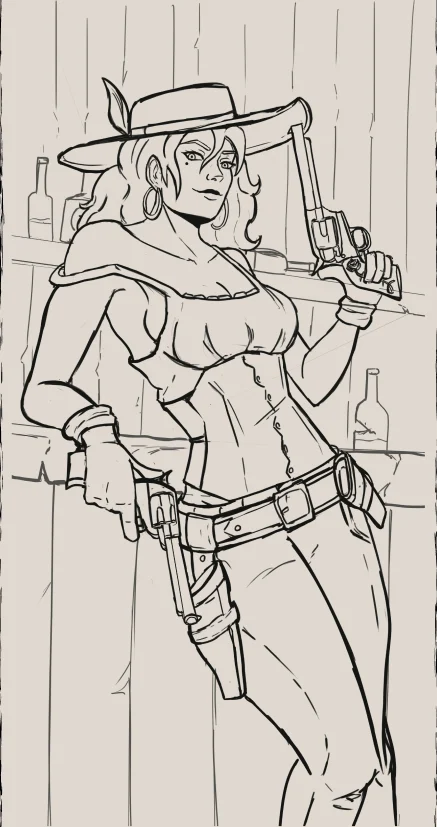
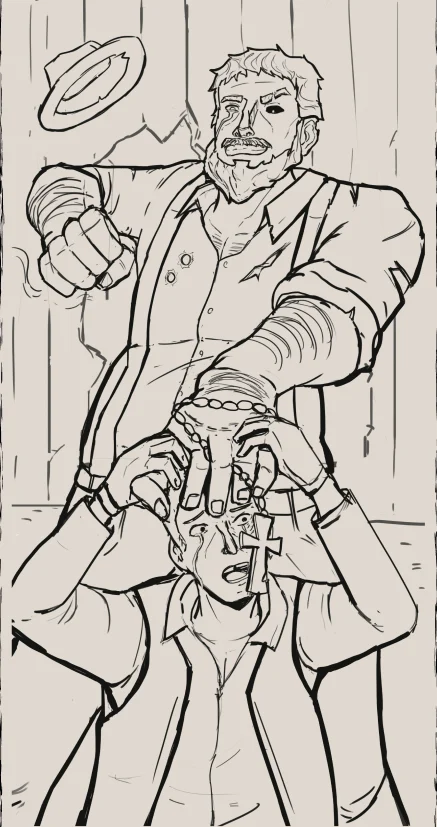
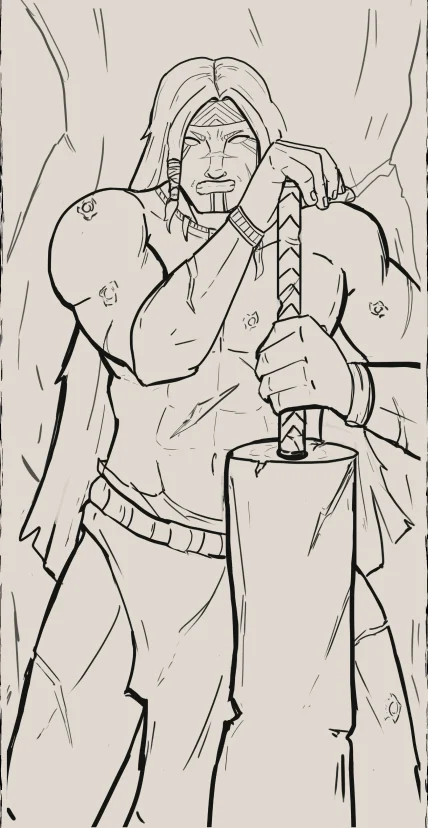
There are 10 playable characters, inspired by classic western archetypes, and I drew all of them. Each one has its own art, a distinctive colour and an exclusive special ability, and every prop tells you the ability at a glance: the Reverend's bible and rosary, the Sheriff's lasso, the Fortune Teller's cards. The colours work as an accessibility feature and make gameplay easier, showing at a glance which character each die belongs to.
The curses
There would be no supernatural theme without mechanics that completely change the flow of a match. That is the role of the curses: depending on the area where the die lands, the player receives an effect that lasts for a few rounds. Playing blindfolded, throwing from far away, among other challenges.
Sketches & prototypes
Icons
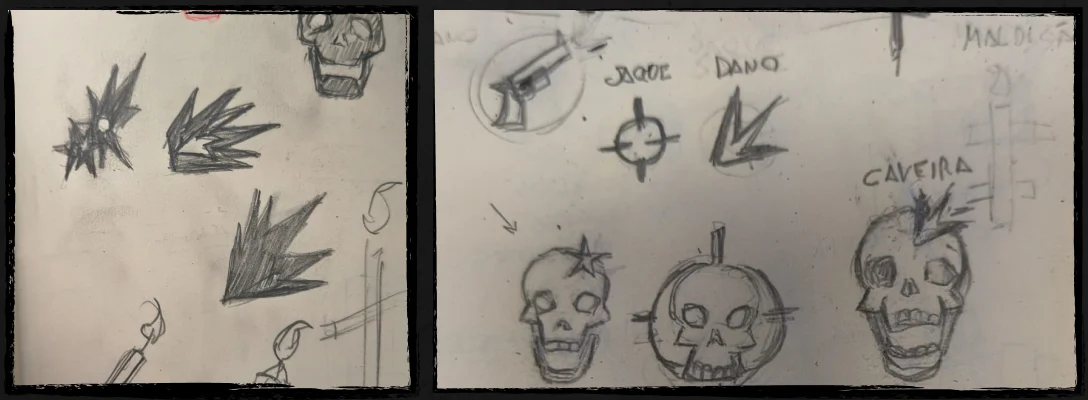
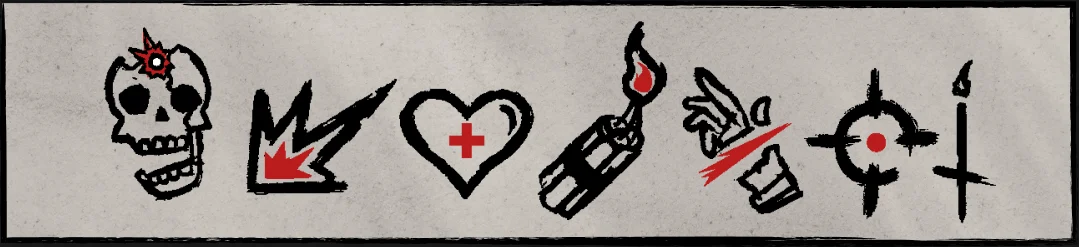
The icons started as freehand drawings, were finished in Photoshop and vectorized in Illustrator. They all share the same visual language, and on the character sheets each icon takes the main colour of its character.
Character sheets
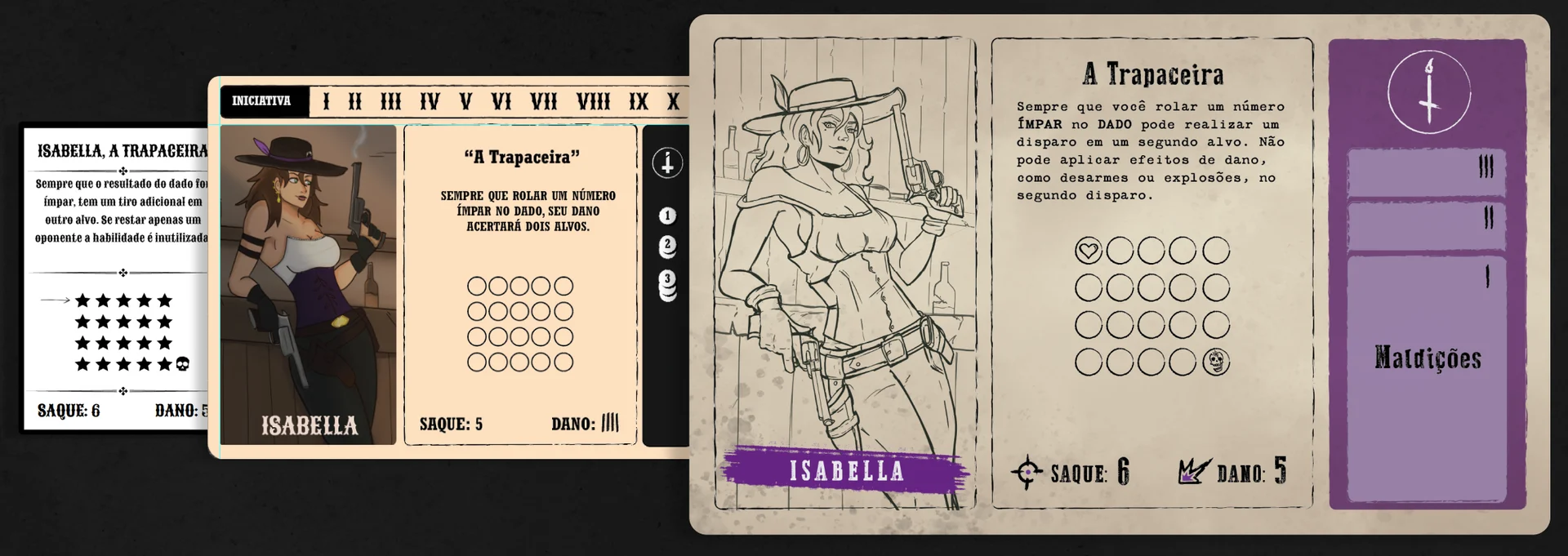
The character art and sheets went through big changes. The first version worked but clashed with the visual concept, and the material was too thin. The second got the look right but failed on usability: too many functions, no iconography and initiative tied to the character. The final version, with reimagined art printed on matte coated paper, communicates intuitively and also holds the curses in play, so they don't end up scattered across the table.
Board
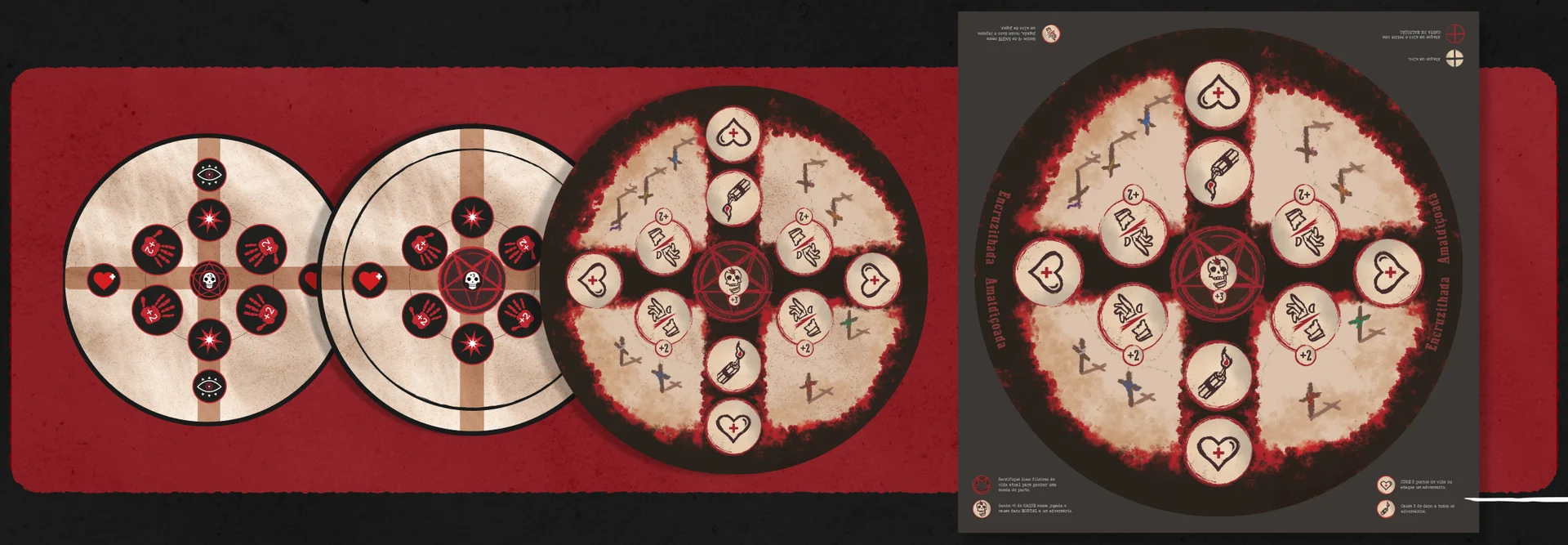
The circular format on holler paper, marked by the crossroads, has been there since the first version. The icons, however, changed completely to give it more visual appeal. In the last version, legends were added to explain each target area and keep the game flowing.
Components
- Initiative bullets: A track and silver bullets marked with an “X” in each character's colour. They set the players' attack order.
- Life bullets: A life counter made of smaller bullets, like a common six-shot revolver.
- Cursed coin: Hitting the inner pentagram lets a player make a pact with the Encruzilhado and gain special abilities. The player receives a cursed coin to mark the pact.
- Special items: Some characters have unique items tied to their abilities, such as the Huntress's trap.
Conclusion
The challenge of the project was always to create a game that would draw people to play together and keep their attention and engagement. Curiously, the answer came from mechanics as simple as old games and pastimes. Throwing dice at a target, and curses that made players pay a forfeit, like playing with their eyes closed or on their knees, were what caught the attention of everyone who playtested it.
The level of engagement surprised me the most. Even with nothing at stake, the game took on an almost passionate tone, with every player fully committed to surviving and winning. Those moments showed the goal had been reached: the game brings people together through its theme, mechanics and rules, and keeps them there without depending on any technology.